Reference
Jindřichův Hradec Region Museum | Audiovisual Exhibition
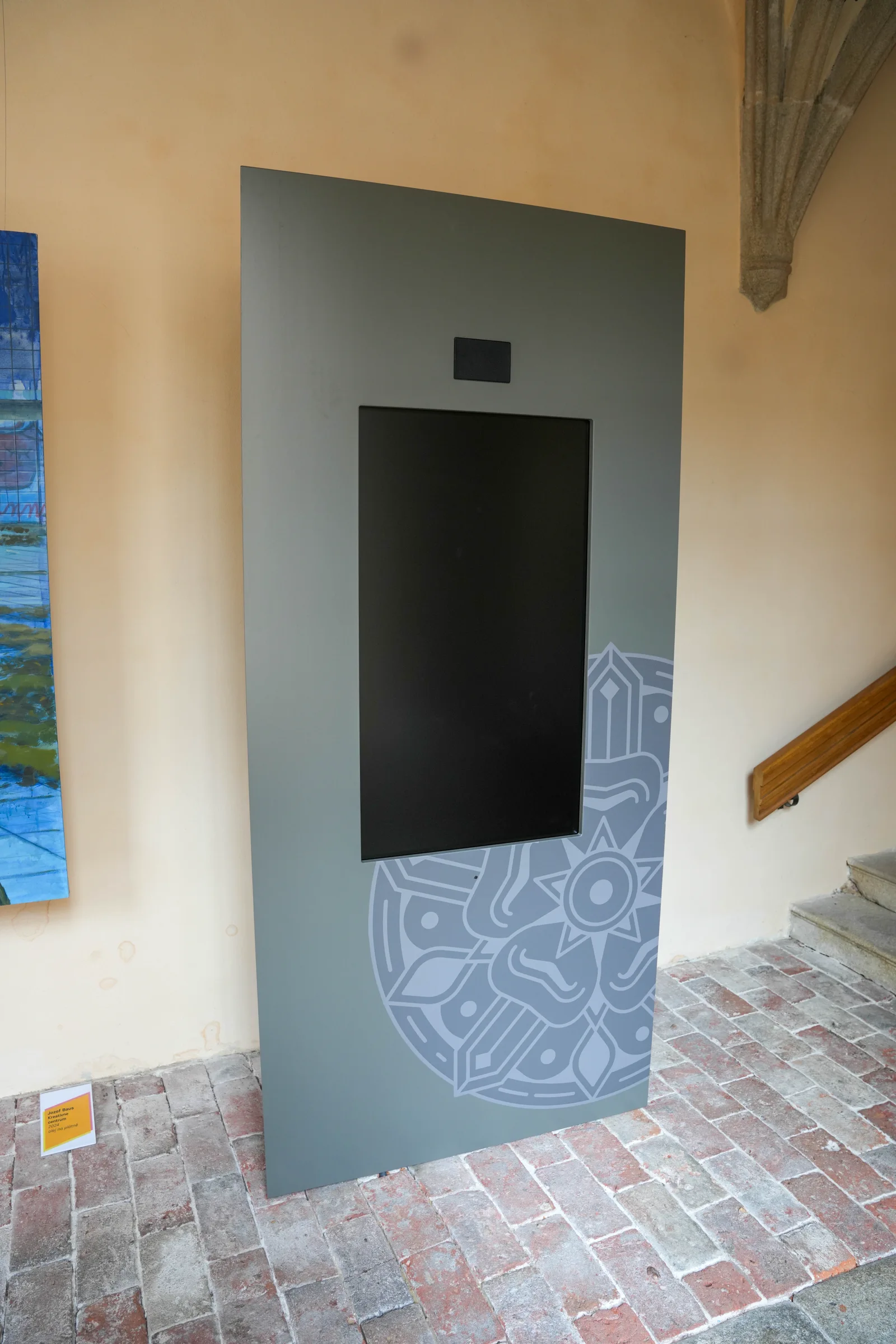
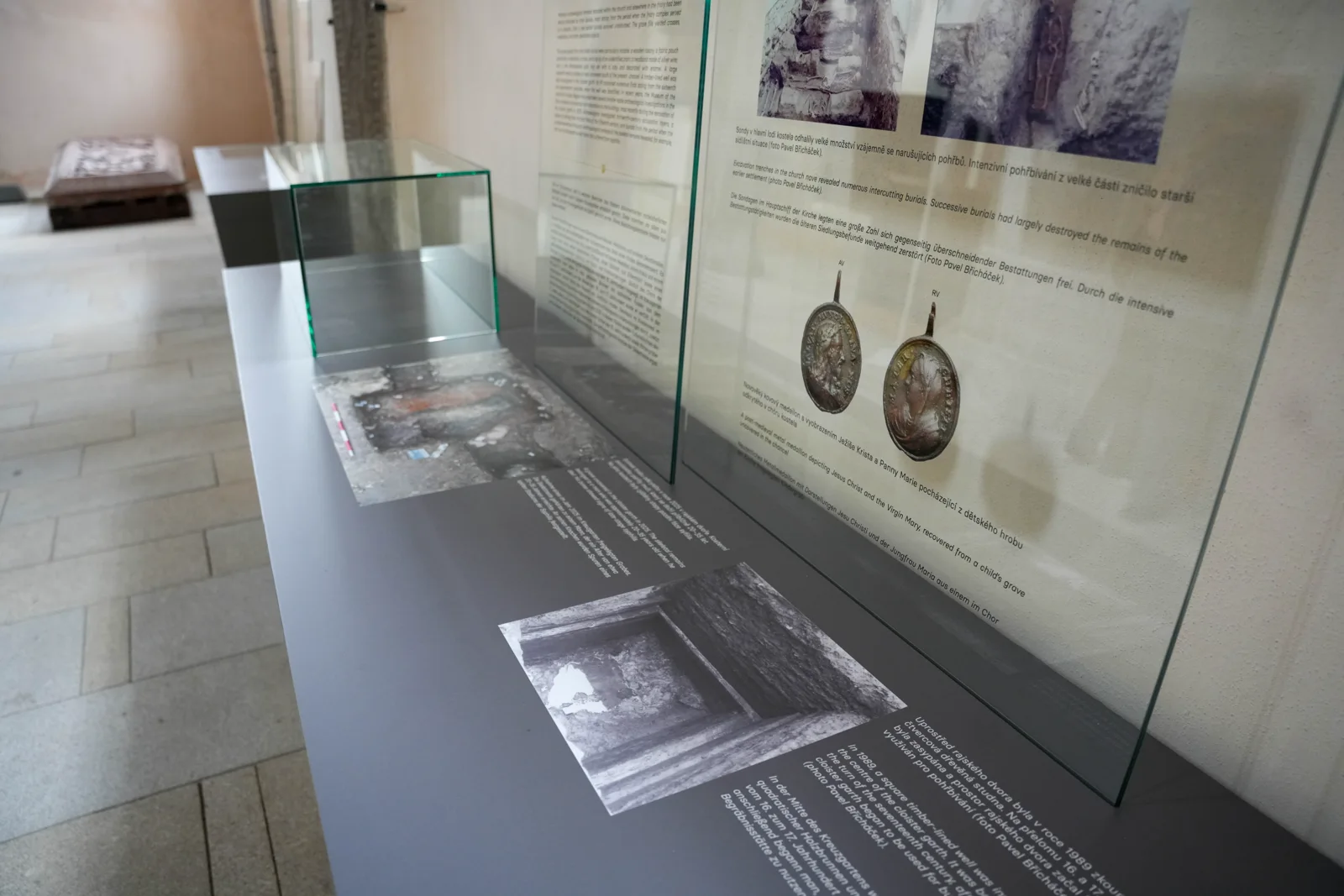
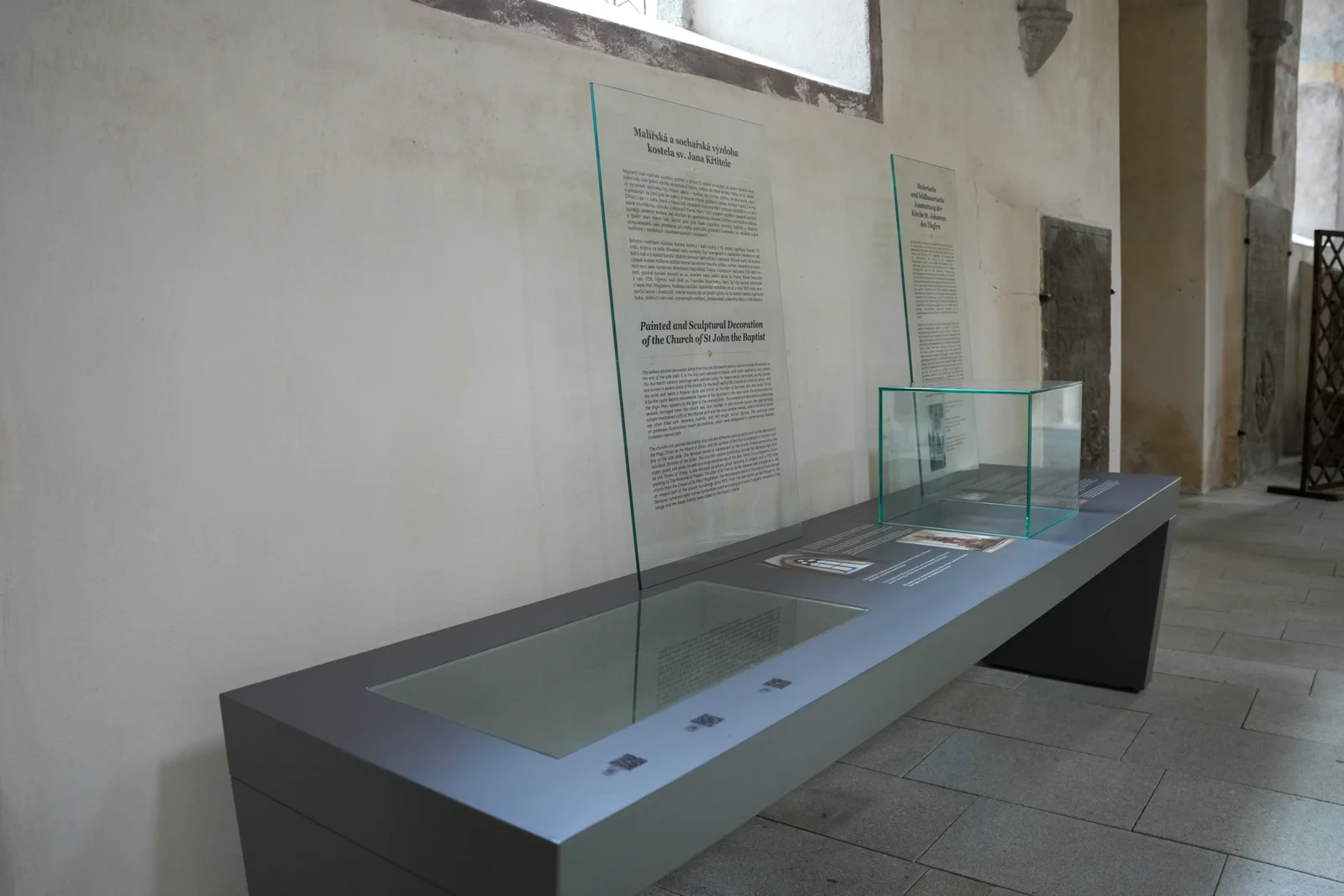
The creation of an audiovisual exhibition within the historic complex of the Church of St. John the Baptist and the Minorite Monastery in Jindřichův Hradec successfully integrated contemporary display elements with the unique character of this sacred space. In collaboration with our partner, Zebra Studio, we participated in the realization of the exhibition, which featured custom-made elements, display cases, exhibition panels, furnishings, and structures designed to accommodate the integration of audiovisual technology.
Show result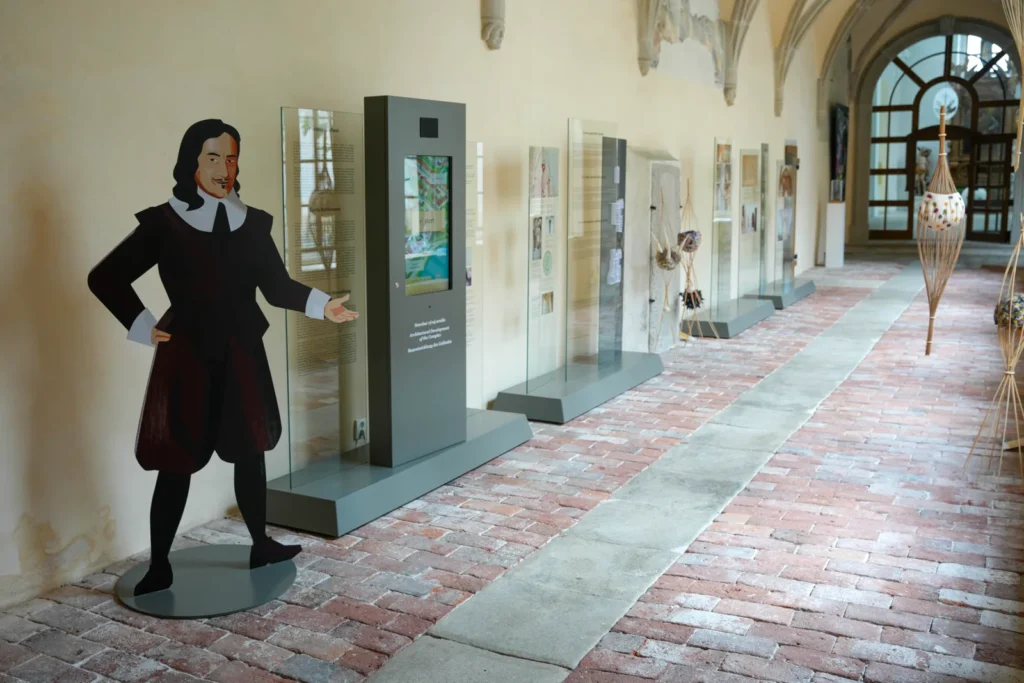


The reason
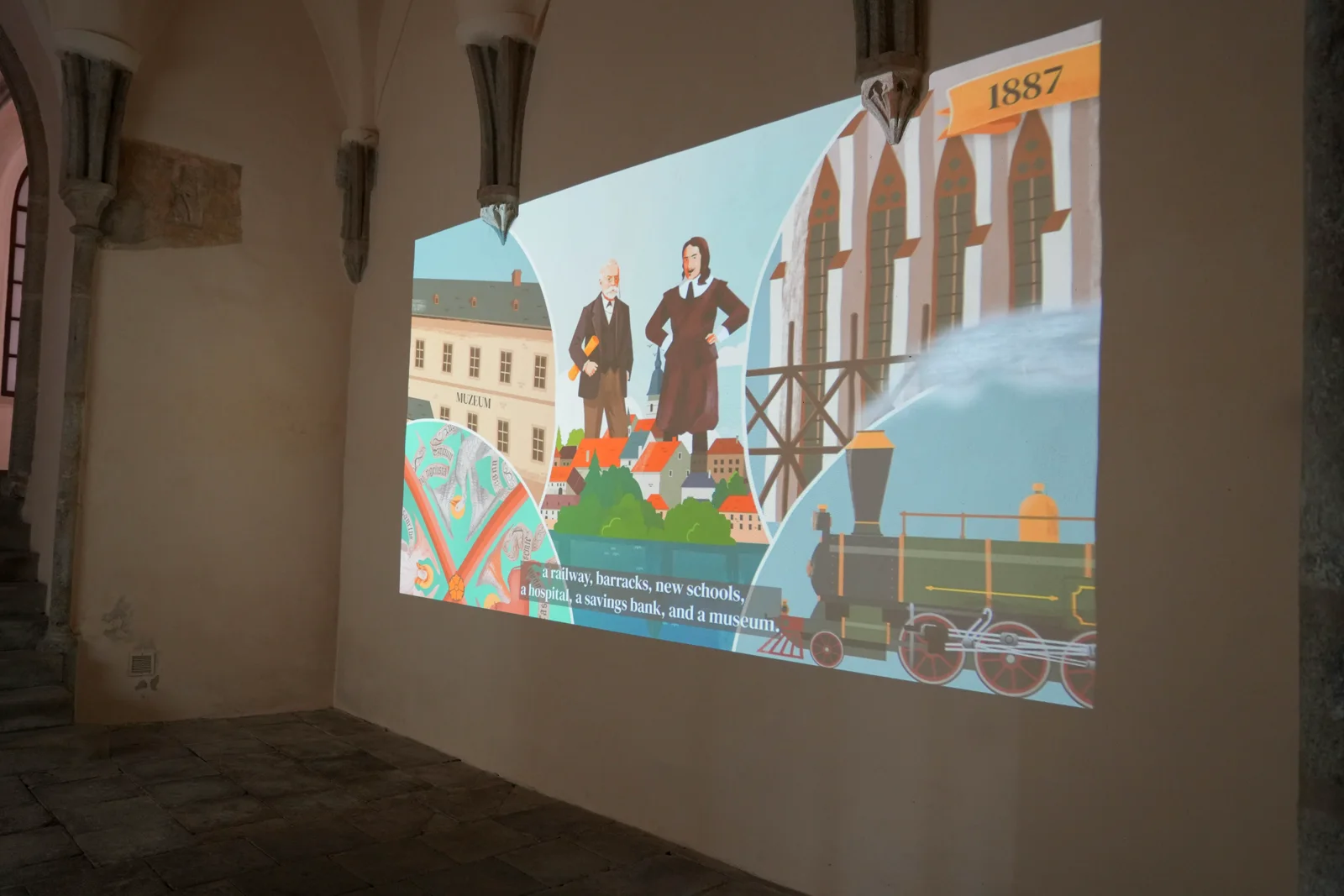
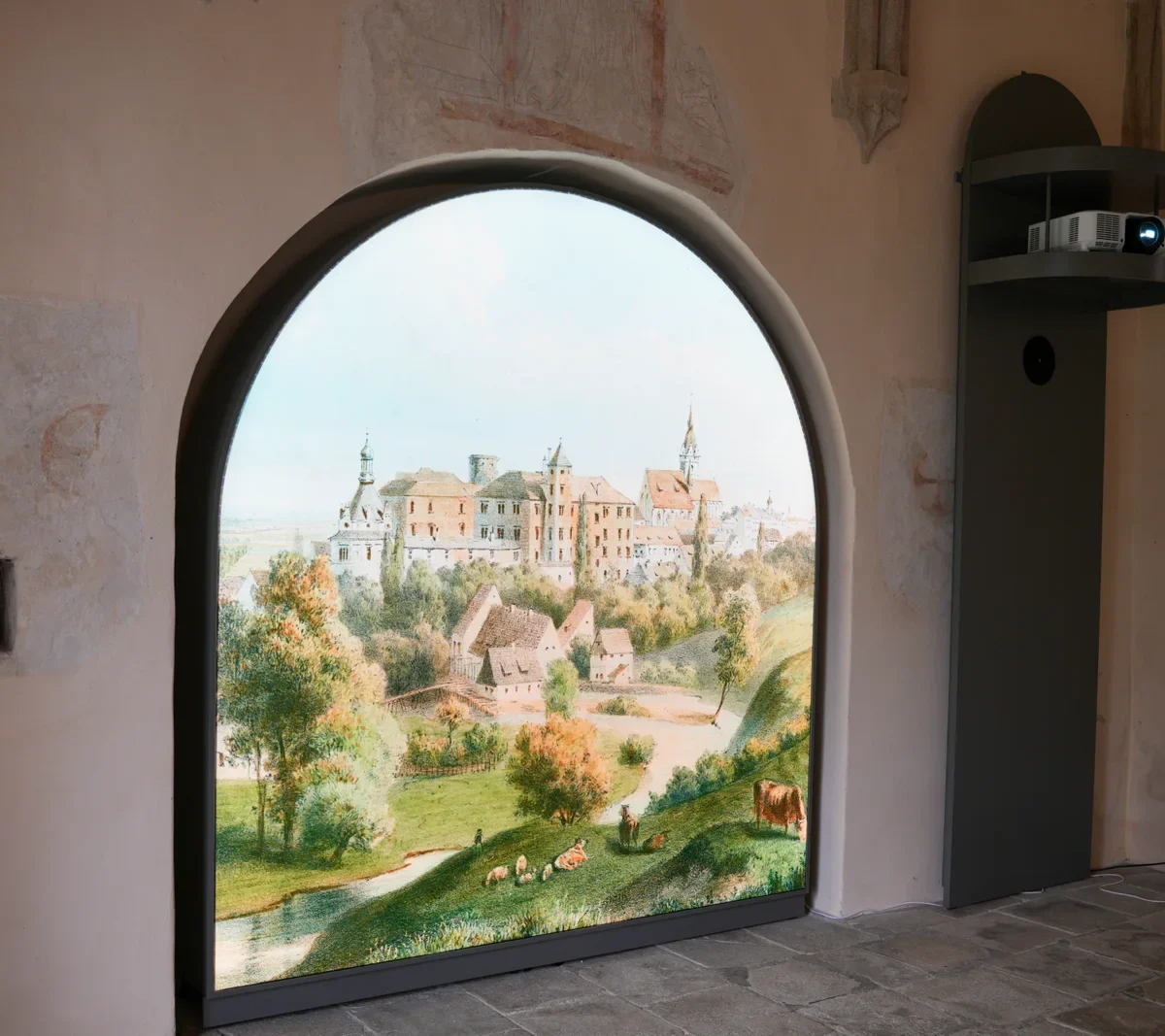
The project aimed to create a modern way of presenting the history of the church and monastery—along with their artistic heritage—without allowing the new elements to overshadow the architecture of the historic structure itself. Consequently, the exhibition combines physical artifacts, graphic content, and audiovisual technologies. Visitors are guided through various themes by projections, screens, sound elements, lighting, and exhibition furnishings, while the site’s original frescoes and architectural features remain a key component. The design incorporates features such as projections directly onto a fresco, augmented reality, LCD displays, and a large-scale projection accompanied by sound and light.
Atypical Exhibition
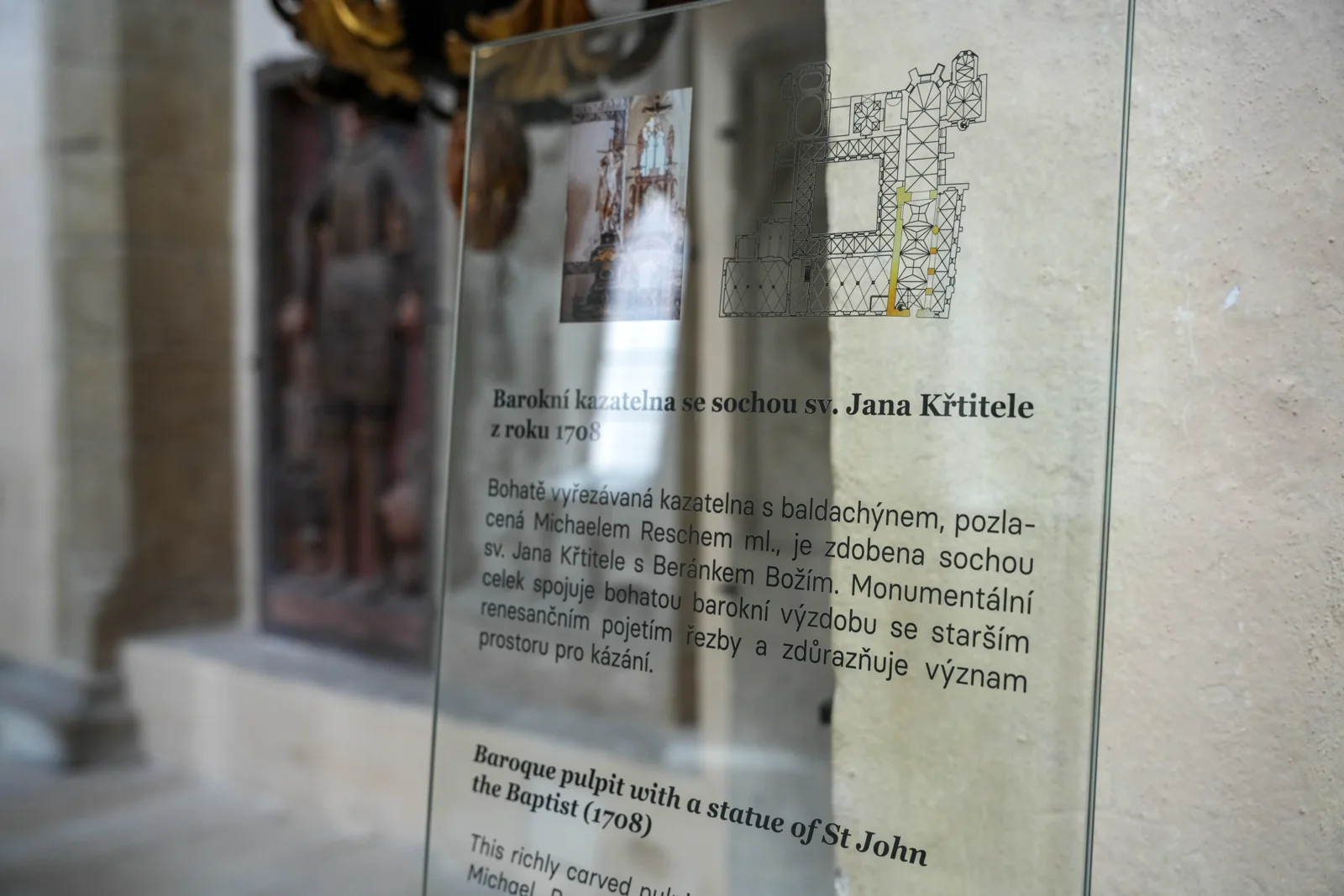
The project involved the production of various types of custom exhibition furniture and structures designed for specific locations within the historic site. These exhibition elements combine lacquered MDF structures, safety glass, and graphic applications. Some also house technical equipment, such as media players, amplifiers, LCD screens, sensors, and speakers. Consequently, the technical documentation accounts for the precise coordination of the manufacturing process with suppliers of AV equipment, lighting, and graphic elements.
I am interested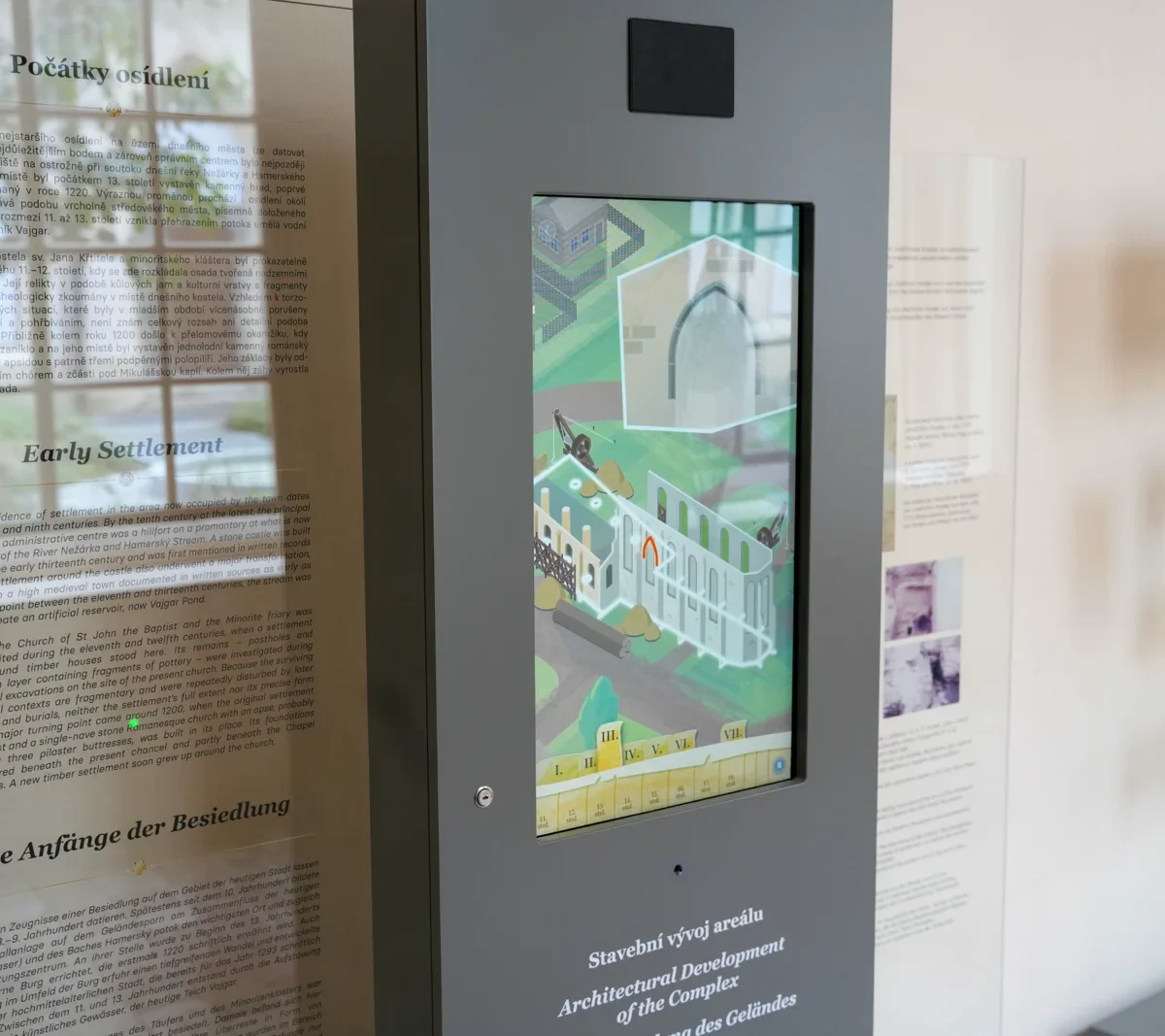
Specific elements designed directly for the exhibition
The project also included specific elements created expressly for the nature of the exhibition—ranging from a large-format lightbox to display counters with integrated showcases. The actual implementation within a historic building posed a particular challenge; the installation of technical and exhibition components had to be carried out with due regard for the existing frescoes, the architecture, and the character of the individual spaces.
I am interestedResult
The result is an exhibition that blends a historical setting with a contemporary approach to content presentation. Bespoke furnishings, display cases, graphic elements, and integrated audiovisual technologies create a visitor route that showcases the site’s history through a variety of media—including original artifacts, imagery, sound, lighting, and digital content. At the same time, these new additions remain visually understated, allowing the most significant features—the historical architecture itself and the artistic ornamentation of the space—to take center stage.